You Deserve This: Breaking Down the Hidden Barriers That Keep Queer People From Accepting Care

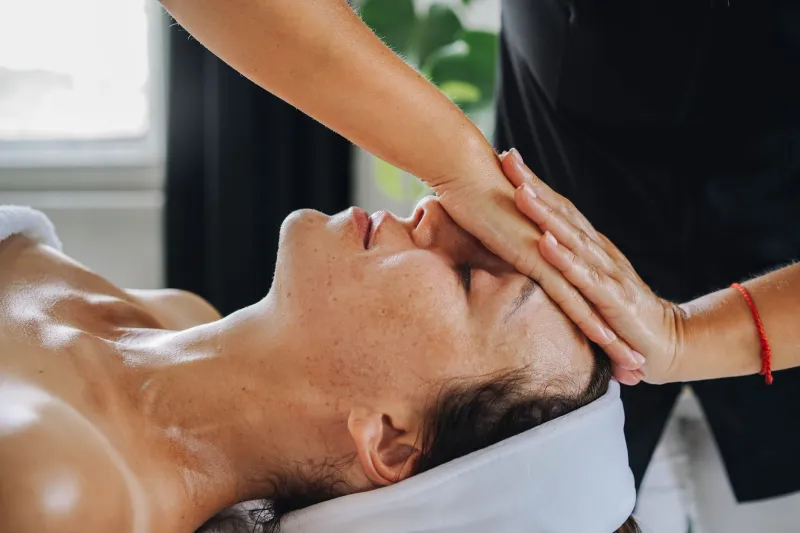
There's a moment a lot of queer people recognize — you're lying on a massage table, or you've just booked your first spa day in years, and instead of exhaling, you tense up. A quiet voice in the back of your head whispers: Is this really for me? Should I even be here?
It's not paranoia. It's not ingratitude. It's something far more layered — a deeply conditioned reflex that tells many LGBTQ+ individuals that receiving care, especially physical, nurturing care, is somehow unearned. And unpacking that reflex might be one of the most important things you do for your long-term wellbeing.
Where the Resistance Actually Comes From
Let's be honest about the history here. For generations, queer and trans people in the United States have had complicated — and often traumatic — relationships with healthcare systems, bodies, and touch. Medical institutions pathologized homosexuality until 1973. Trans people continue to face discrimination in clinical settings at alarming rates. And for many queer folks who grew up in religious or conservative households, the message about their bodies was rarely one of celebration.
Dr. Rae Winters, a queer-affirming therapist based in Chicago, puts it plainly: "When you've spent years receiving the message that your body is wrong, shameful, or something to be fixed, it becomes genuinely difficult to receive care that treats your body as something worth tending to. The nervous system has learned to brace, not receive."
That bracing has a name in somatic psychology — it's sometimes called a defensive holding pattern. And it doesn't just show up in therapy offices. It shows up when someone can't relax during a massage, when a person declines a spa gift card because they feel guilty spending money on themselves, or when a queer individual avoids wellness spaces altogether because they assume they'll be judged or misgendered.
Internalized Homophobia and the Self-Denial Loop
Internalized homophobia — the unconscious absorption of society's negative attitudes toward queer identities — has a sneaky way of showing up in self-care behaviors. It doesn't always look like self-hatred. Sometimes it looks like chronic self-deprioritization. Like always being the one who gives but never lets themselves receive. Like feeling vaguely guilty when something feels good.
This pattern is especially common among queer people who came out later in life, or who grew up in communities where their identity was actively suppressed. The logic, absorbed over years, goes something like: I already ask too much of the world just by existing. I shouldn't also ask for comfort.
That's a heavy load to carry into a wellness space — and it's one that no amount of lavender essential oil is going to automatically dissolve.
The Medical Trauma Layer
For trans and non-binary individuals specifically, the barrier to receiving care often has a sharper edge: direct medical trauma. Whether it's being misgendered during a clinical exam, being denied gender-affirming care, or simply having had a provider who made them feel like a problem to be solved rather than a person to be cared for, these experiences leave marks.
"My clients who've had bad experiences with healthcare providers often have a hair-trigger stress response in any setting that involves a stranger touching their body," says Marcus Delray, a licensed massage therapist in Atlanta who specializes in working with LGBTQ+ clients. "The work we do together isn't just about muscle tension. It's about slowly rebuilding trust — with me, and with their own body."
That rebuilding is real, tangible work. And it starts with acknowledging that the hesitation isn't weakness. It's a rational response to an irrational amount of harm.
Flipping the Script: Practical Ways to Start Receiving
So how do you actually shift from I don't deserve this to this is mine and I'm taking it? It doesn't happen overnight, but there are genuine entry points.
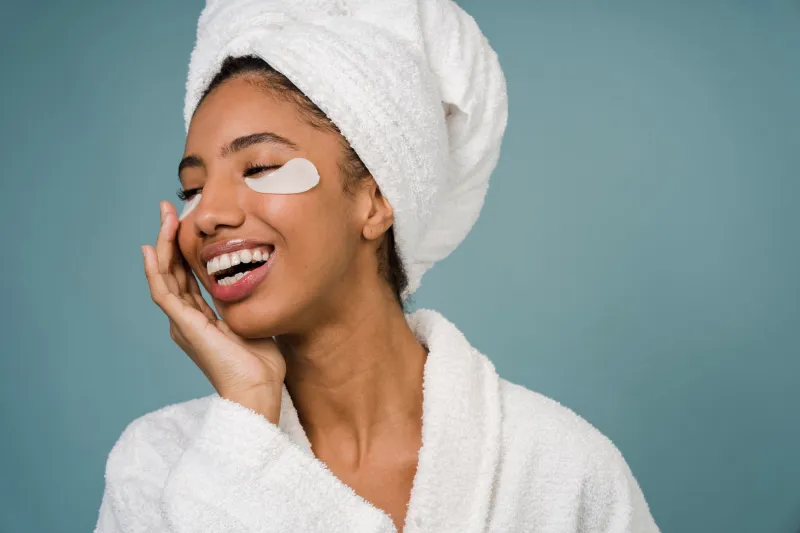
Start smaller than you think you need to. You don't have to book a four-hour spa day to begin practicing the art of receiving care. A 30-minute foot soak, a 15-minute chair massage at a local wellness fair, even a deliberate skincare routine — these are all ways of practicing the embodied message that your comfort has value.
Find practitioners who speak your language. There's a real difference between a massage therapist who is technically competent and one who is actively LGBTQ+-affirming. Look for intake forms that include gender identity and pronoun fields. Look for practitioners who've done specific training around queer and trans bodies. When you feel seen before the session even starts, it becomes easier to let your guard down.
Bring your own context to the table. You're allowed to tell a wellness provider what you need. You're allowed to say "I have some medical trauma around touch" or "I prefer not to be asked about my body in certain ways." Queer-affirming practitioners welcome this. It's not oversharing — it's collaboration.
Reframe what receiving means. In a lot of queer communities, giving is coded as strength and receiving is coded as vulnerability — sometimes even weakness. But there's a different frame available: receiving care is an act of community. When you allow someone to care for you well, you're participating in a reciprocal ecosystem where everyone's wellness matters. Your healing isn't selfish. It's part of the larger project.
Work with a therapist if the block feels deep. If the resistance to care is rooted in significant trauma — medical, relational, or otherwise — it might be worth working with a queer-affirming therapist alongside whatever wellness practices you're building. Somatic therapy, EMDR, and Internal Family Systems (IFS) are all approaches that can help untangle the nervous system's learned defenses.
The Radical Ordinariness of Being Cared For
Here's the thing nobody talks about enough: for a lot of queer people, simply being cared for without an agenda — without being fixed, converted, studied, or pitied — is a genuinely new experience. And new experiences, even good ones, can feel disorienting at first.
That disorientation isn't a sign that something is wrong. It's often a sign that something is finally going right.
The wellness spaces that are built for queer communities — the LGBTQ+-owned spas, the affirming bodywork practices, the inclusive retreat centers — exist precisely because someone understood that healing requires safety first. And safety, for many queer folks, has to be actively constructed, not assumed.
You are allowed to be cared for. You are allowed to take up space on that table, in that steam room, in that treatment chair. Not because you've earned it through suffering, and not because you've finally proven yourself worthy — but simply because you're here, and you're human, and your body has been working hard for a long time.
That's enough. That has always been enough.
Now exhale.