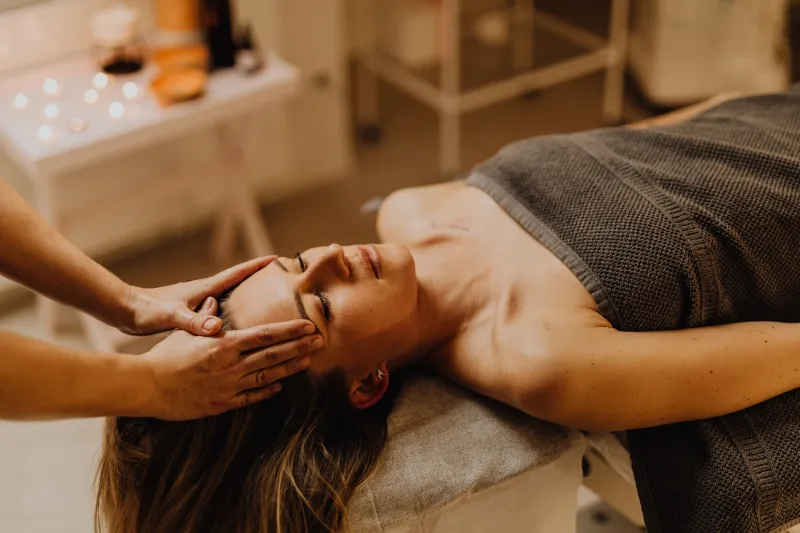
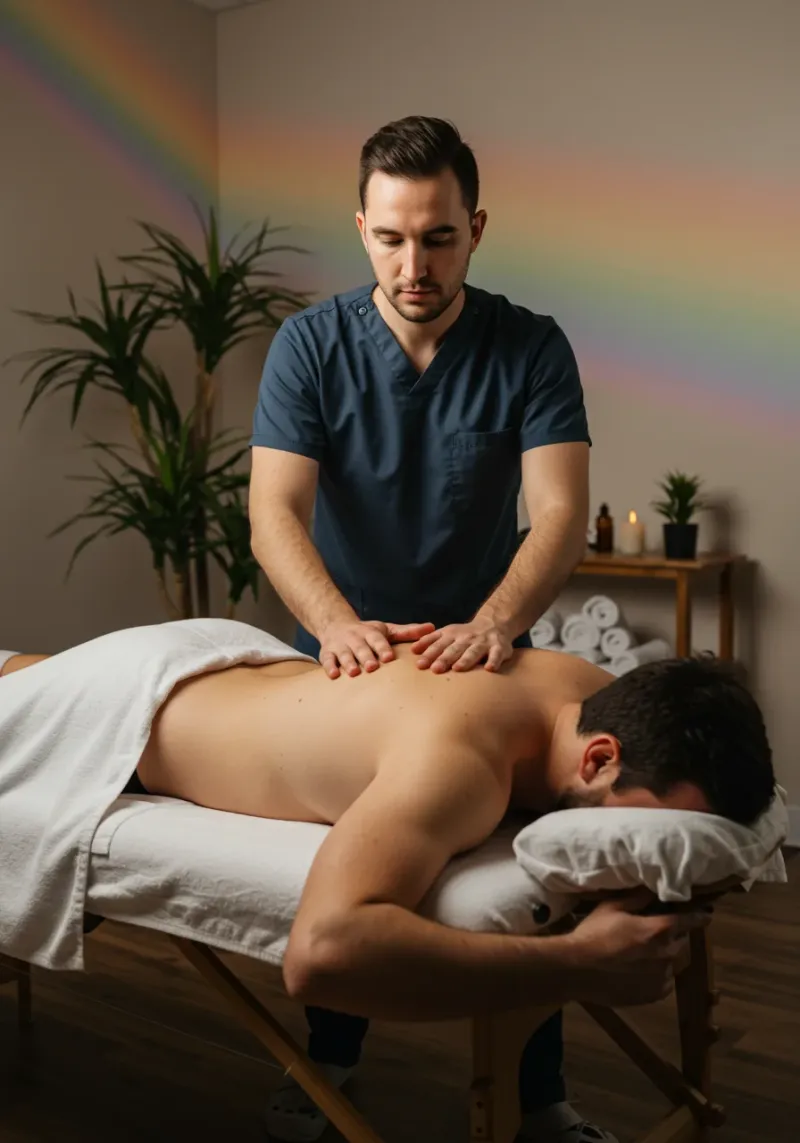
Good for You and Good to You: Why Queer Wellness Should Feel Like a Celebration, Not a Chore
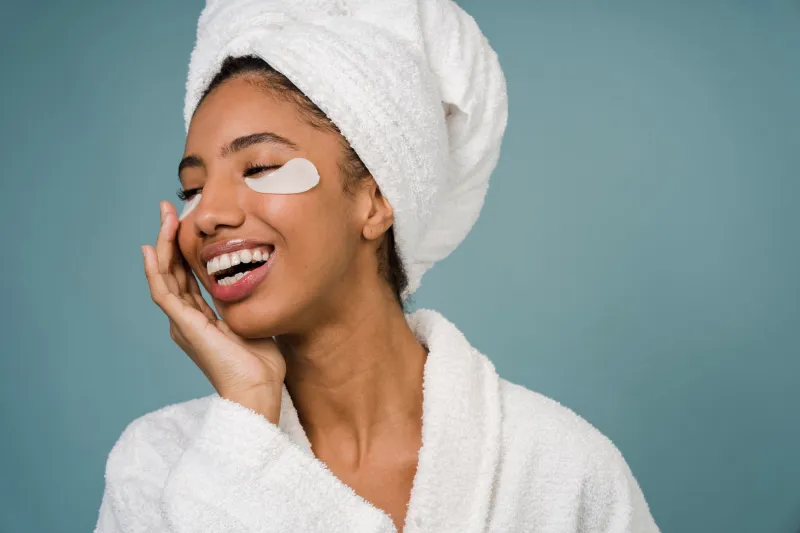
Let's start with a question that might sting a little: When was the last time you did something purely because it felt good — and didn't immediately feel weird about it?
For a lot of queer people, that question lands somewhere uncomfortable. Maybe you booked a massage and then second-guessed yourself the whole drive there. Maybe you indulged in a long bath, a spa day, or a bodywork session and spent the afterglow mentally justifying the expense. Maybe you've never even let yourself get that far — because somewhere along the way, you absorbed the message that pleasure isn't really for you.
That message didn't come from nowhere. And unpacking it is one of the most important things the LGBTQ+ wellness conversation needs to do right now.
The Guilt Was Never Yours to Begin With
Here's the honest truth: a lot of queer people were raised in environments — families, religious communities, schools, entire zip codes — that treated their identities as problems to be managed. Pleasure, especially bodily pleasure, got tangled up with shame from a very early age. The idea that you deserve to feel good in your own skin? For many of us, that was explicitly or implicitly off the table.
Even for folks who've done significant healing work, those early messages have a way of lingering. Internalized stigma is sneaky like that. It doesn't always show up as self-hatred anymore — sometimes it shows up as low-grade guilt when you spend money on yourself, discomfort when someone gives you a compliment, or an inability to fully relax and receive care without your brain going into overdrive.
The wellness industry, for all its recent progress, hasn't always helped. For decades, mainstream wellness culture has framed self-care as something you do to fix yourself — to lose weight, to be more productive, to optimize your performance. That framing is punishment wearing a eucalyptus-scented disguise. It says: you are not enough as you are, but if you work hard enough at this, maybe you'll get there.
Queer folks don't need more of that. We've had enough correction to last several lifetimes.
Wellness as Resistance (and as Pure, Uncomplicated Fun)
There's a version of this conversation that leans heavily on the political — and yes, for marginalized communities, reclaiming your body and your joy is a political act. There's real power in showing up to a spa, a yoga studio, or a massage table and simply existing there as your full queer self.
But here's what sometimes gets lost in that framing: wellness doesn't have to be profound to be valid. Sometimes a hot stone massage is just a hot stone massage. Sometimes a long soak in a bathhouse is just a really nice way to spend a Sunday afternoon. Sometimes getting your feet rubbed is not a radical statement about dismantling heteronormativity — it's just a treat, and it feels amazing, and that's enough.
The pressure to make every act of self-care mean something can actually become its own form of exhaustion. If you can't enjoy a wellness experience without narrating it as activism in your head, you might be bypassing the experience itself. And the experience — the actual physical sensation of being cared for, of your nervous system softening, of your muscles unknotting — that's where the real healing lives.
What Pleasure-Forward Wellness Actually Looks Like
So what does it look like to approach wellness from a place of joy rather than obligation? A few things tend to shift.
You stop waiting until you've earned it. Wellness isn't a reward for being productive enough, stressed enough, or sick enough. You don't have to hit a breaking point before you're allowed to book a session or take a day for yourself. Pleasure-forward wellness operates on the assumption that you deserve care right now, in your current state, without any prerequisites.
You tune into what actually feels good to you. Not what's trending on wellness TikTok, not what your straight coworkers are doing at their corporate spa retreat. Queer people have beautifully diverse relationships with their bodies, and what feels nourishing varies wildly from person to person. Maybe deep tissue massage feels like heaven. Maybe you prefer something gentler. Maybe you're drawn to energy work, or soaking pools, or a solid stretch session. Following your own pleasure compass — rather than some externally imposed wellness checklist — is the whole point.
You let yourself receive. This one's big. A lot of us are much better at giving care than accepting it. Whether it's because we were conditioned to take up less space, or because vulnerability feels dangerous, or because we've just never had much practice — receiving can feel genuinely uncomfortable. Wellness spaces, at their best, are places to practice exactly that: lying down, breathing, and letting someone else take care of you for a little while.
You drop the apology. You don't owe anyone an explanation for why you got a massage, why you spent the afternoon at a bathhouse, or why you treated yourself to something that felt indulgent. The apologetic energy that so many queer people carry into wellness spaces — the subtle sense that you're taking up too much room, spending too much, asking for too much — is worth actively pushing back on.
Finding Spaces That Match the Energy
None of this happens in a vacuum. The environment matters enormously. It's really hard to lean into pleasure and ease when you're in a wellness space where you feel watched, judged, or unwelcome. That discomfort is real, and it's not something you should just push through with enough mindset work.
Seeking out LGBTQ+-affirming or queer-owned wellness spaces — the kind you'll find throughout this directory — isn't just about safety, though that matters too. It's about finding places where the vibe actually supports the kind of open, unguarded relaxation that makes wellness work. When you don't have to manage how you're perceived, you can actually show up for yourself.
And when you find those spaces? Let yourself enjoy them. Fully. Without the running commentary in your head about whether you deserve it.
The Bottom Line
Queer wellness doesn't have to be a healing journey or a political statement or a trauma-recovery protocol — though it can be all of those things if that's what you need. But it can also just be good. Pleasurable. Luxurious, even. Something you do because it makes you feel alive and cared for and present in your own body.
You were never meant to feel guilty about that. The guilt was handed to you by people and systems that had their own reasons for wanting you smaller, quieter, and less at home in yourself.
Leave it at the door. Your wellness should feel like a celebration of who you are — not a penance for it.