Reclaiming Touch: How LGBTQ+ Folks Can Bridge the Gap Between Healing and Being Held
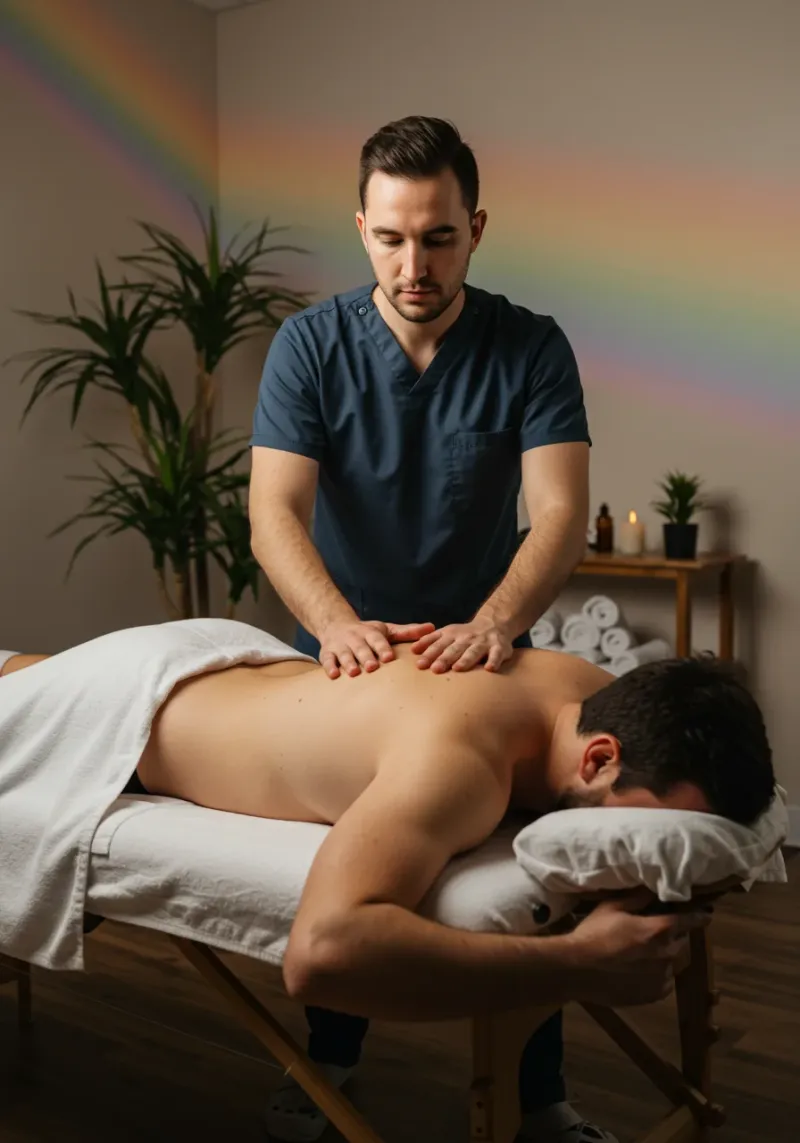
Photo: LGBTQ person relaxing during massage therapy safe wellness space, via elev8massagestl.com
Let's be honest for a second. When most wellness content talks about "the healing power of touch," they're imagining a pretty specific client — one who's never had a doctor dismiss their symptoms because of their identity, never had a provider use the wrong pronouns mid-session, never had to decide whether to disclose something about their body before taking their clothes off in front of a stranger.
For a huge portion of the LGBTQ+ community, therapeutic touch isn't a neutral experience. It arrives loaded. And that's not a personal failing — it's a completely rational response to decades of navigating healthcare, wellness, and social spaces that were never built with us in mind.
Understanding why that gap exists — and how to start closing it — is what this piece is all about.
The Weight We Carry Into the Room
Therapeutic touch, at its best, is deeply vulnerable. You're lying down, partially unclothed, trusting a stranger with your physical body. For people who've experienced medical trauma, body dysphoria, sexual trauma, or chronic shame around their identity, that vulnerability can feel less like relaxation and more like exposure.
Research consistently shows that LGBTQ+ individuals experience higher rates of medical distrust than their straight, cisgender peers — and for good reason. Decades of pathologization, the HIV crisis and its institutional failures, ongoing discrimination in clinical settings, and the simple exhaustion of having to educate every provider you meet has left a mark. That mark doesn't disappear when you walk into a spa.
For trans and non-binary folks, there's an added layer. Questions about what to disclose — about surgical history, hormone use, which body parts are okay to work on — can feel like a minefield when you don't know whether your practitioner is affirming or just tolerant. There's a difference, and your nervous system knows it.
What Practitioners Are Learning (and What They Still Need to Understand)
The good news? A growing number of massage therapists, bodyworkers, and wellness practitioners across the US are actively working to close this gap. They're seeking out continuing education on trauma-informed care, attending LGBTQ+-specific training programs, and rethinking their intake forms, language, and session structures from the ground up.
Practitioners who specialize in working with queer clients often describe a shift in how they approach consent and communication. Rather than a one-time "where does it hurt?" at the start of a session, trauma-informed bodywork builds in ongoing check-ins. It slows down. It treats the intake conversation as a real conversation, not a liability form.
One thing that comes up consistently in these spaces: the intake form is often the first signal a client gets about whether a practitioner is genuinely affirming. A form that asks for preferred name and pronouns, that includes gender options beyond a binary, that leaves space for clients to note specific sensitivities or areas to avoid — these aren't just administrative details. They're messages. They say: you're expected here, and your whole self is welcome.
If your current wellness provider's intake form still only has "Male" and "Female" checkboxes and asks for your "real name," that's information worth having before you book again.
Frameworks for Communicating Your Needs (Without Over-Explaining Yourself)
One of the trickiest parts of navigating wellness spaces as an LGBTQ+ person is figuring out how much to share, and when. You shouldn't have to deliver a TED talk on your identity just to get a good massage. But you also deserve to feel safe, comfortable, and seen.
Here are a few practical frameworks that can help:
The "What I Need" Script Before your session, try identifying three things: one thing that helps you feel safe, one area or topic that's off-limits, and one thing you want the practitioner to know about your body or experience. You don't have to share all three — but having them clarified in your own mind gives you agency in the conversation.
For example: "I prefer not to have my chest worked on directly. I'll let you know if I need a check-in." Simple. Clear. No explanation required.
The Vibe Check Before You Book A quick email or phone call before your first appointment can tell you a lot. Ask something low-stakes but telling: "Do you have experience working with trans clients?" or "How do you handle pronoun preferences in your sessions?" A practitioner who's genuinely affirming will answer easily and warmly. Someone who stumbles or gets defensive is also giving you useful information.
Give Yourself Permission to Stop This one sounds obvious, but it needs to be said: you are always allowed to end a session, ask for a modification, or simply say "I need a moment." A good practitioner will not only accept this — they'll welcome it. If you're in a space where that doesn't feel possible, that's worth noticing.
Building a Relationship, Not Just Booking an Appointment
One of the most transformative things that can happen in LGBTQ+ wellness is finding a practitioner you actually trust and returning to them over time. The therapeutic relationship — the accumulated understanding between you and a bodyworker who knows your history, your preferences, and your goals — is its own form of healing.
This is different from the transactional model a lot of us default to. It requires some vulnerability upfront, yes. But over time, having a practitioner who already knows that your left shoulder holds tension when you're stressed, or that you prefer lighter pressure near certain areas, or that you're working through something specific right now — that's not a luxury. That's community care.
If you're in a city with an active LGBTQ+ wellness scene, directories and community referrals are your best friends. Ask in local queer Facebook groups, check LGBTQ+ community center resource lists, and look for practitioners who explicitly market to queer clients. That explicit visibility matters — it signals intent, not just tolerance.
Your Body Has Always Deserved This
Here's the thing nobody says enough: the discomfort you feel in wellness spaces isn't a you problem. It's a systemic problem that you've been adapting to for years. Reclaiming comfort with your body — through massage, through bodywork, through any form of therapeutic touch — isn't indulgent. It's resistance. It's repair.
You don't have to earn the right to feel good in your body. You don't have to be "healed enough" before you deserve care. And you don't have to do any of this alone.
The conversations are getting easier. The spaces are getting safer. And more practitioners every year are doing the work to make sure that when you walk into that room, you can actually exhale.