Starved for Contact: Understanding Why Queer People Struggle to Ask for Touch — and How to Finally Let Yourself Receive It

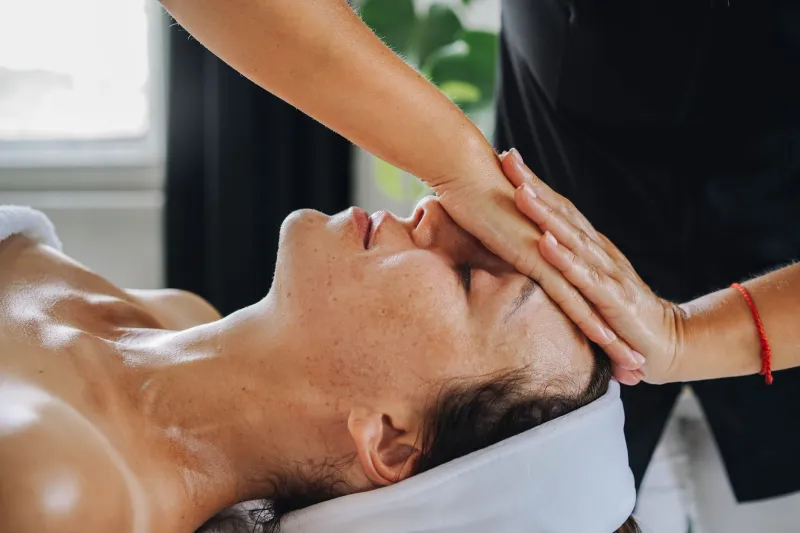
There's a moment a lot of queer people know well. You're sitting across from someone you trust — a partner, a friend, even a massage therapist — and you realize you want something. You want to be held, or touched, or simply acknowledged through physical contact. And then, almost immediately, that want gets buried under something heavier: embarrassment, or a low hum of shame, or the old familiar fear that asking for too much will cost you something you can't afford to lose.
It's not dramatic. It doesn't always look like trauma. Sometimes it just looks like saying "I'm fine" when you're not, or booking a massage and then spending the whole hour tensed up on the table, waiting for it to be over. But underneath that tension is something worth paying attention to — because the inability to receive touch isn't just uncomfortable. Over time, it quietly erodes your relationship with your own body, your connections with other people, and your sense of what you actually deserve.
Why This Is a Queer-Specific Problem (Even If It Doesn't Feel That Way)
Skin hunger — the term researchers use to describe the deep psychological need for physical contact — is universal. But the barriers that get in the way of satisfying it are not equally distributed. For LGBTQ+ people in the US, those barriers tend to be layered in ways that straight, cisgender folks simply don't encounter in the same form.
Start with the basics: most queer people grew up in environments where their bodies were, at best, a source of confusion and, at worst, a source of shame. If you spent your formative years hiding who you were, your body became something to manage rather than something to inhabit. Physical affection — the casual, nonsexual kind that most kids receive without a second thought — often got tangled up with identity anxiety. Hugging someone of the same gender felt loaded. Being touched by someone of the opposite gender felt dishonest. There was rarely a version of physical contact that felt straightforwardly safe.
Then there's rejection trauma, which tends to compound over time in ways that are hard to untangle. Research consistently shows that LGBTQ+ individuals face higher rates of familial rejection, social ostracism, and relational instability during adolescence. When the people who are supposed to hold you keep letting you go — or push you away entirely — your nervous system learns to expect rejection before it happens. Asking for touch becomes a risk assessment, not a simple human impulse.
The Sexuality-Touch Tangle
Here's something that doesn't get talked about enough: for queer people, physical touch and sexuality have often been conflated in ways that complicate both. Because queer desire was historically pathologized — treated as deviant, dangerous, or at minimum deeply private — many LGBTQ+ folks learned to keep their physical needs under wraps. Wanting to be touched started to feel synonymous with wanting something sexual, which started to feel like something that needed to be hidden, justified, or managed.
This gets especially complicated in wellness contexts. A lot of queer people walk into a massage studio or a spa and feel a low-grade anxiety that's hard to name. Will the therapist be uncomfortable? Will they read something into it? Will asking for a particular kind of touch be misinterpreted? This isn't paranoia — it's a reasonable response to a lifetime of learning that your body and its needs are subject to other people's judgment.
The result is that even in spaces explicitly designed for healing and relaxation, many LGBTQ+ folks spend the entire time on guard. They receive the touch without actually receiving it. They go through the motions of self-care while staying emotionally miles away from the experience.
What Internalized Shame Actually Does to Your Body
Internalized homophobia, biphobia, and transphobia don't stay in your head. They live in your muscles, your posture, your breath. When you've spent years believing — even subconsciously — that your desires are wrong or that your body is something to be ashamed of, that belief gets encoded somatically. Your shoulders carry it. Your chest carries it. Your jaw carries it.
This is why so many queer people describe feeling disconnected from their bodies, or report that physical touch — even welcome, consensual touch — can trigger discomfort or emotional flooding. It's not that the touch itself is the problem. It's that the body has been holding so much for so long that being touched can feel like pressing on a bruise.
Recognizing this isn't about pathologizing yourself. It's about understanding that your nervous system responded rationally to irrational circumstances, and that healing is possible — but it usually requires more than just deciding to relax.
Practical Frameworks for Rebuilding Your Relationship With Touch
Start with consent as a practice, not just a concept. One of the most powerful things you can do is begin noticing — in real time — what your body actually wants versus what you're performing. Before a massage, before a hug, before any physical interaction, pause and check in with yourself. Not to overthink it, but to practice the habit of listening. What do you actually want right now? What would feel good? What feels like too much?
Work with practitioners who understand queer bodies. This is non-negotiable. Finding a massage therapist, somatic coach, or bodyworker who has genuine experience with LGBTQ+ clients changes the entire dynamic. When you're not spending mental energy managing someone else's comfort, you have more capacity to actually be present in your own body. Look for practitioners who explicitly advertise LGBTQ+ affirming care, ask direct questions during intake, and don't make assumptions about your body or your relationships.
Distinguish between touch hunger and emotional need. Sometimes what we're craving when we want physical contact is something more layered — validation, connection, safety. That's not a problem to solve; it's information. Getting curious about what's underneath the craving can help you identify what you actually need and ask for it more directly, whether that's in a wellness context or a personal one.
Reframe asking as advocacy, not vulnerability. The narrative that asking for touch is needy or weak is a lie — and it's a lie that disproportionately affects people who've already been told their needs are too much. Asking for what you need from a massage therapist, a partner, or a friend is an act of self-advocacy. It's you deciding that your comfort matters. That reframe doesn't happen overnight, but it's worth practicing.
Go slowly and celebrate small wins. If receiving touch has been complicated for you, don't expect to resolve it in one session or one conversation. Progress might look like lying on a massage table and noticing — just noticing — where you're holding tension. It might look like telling a partner one specific thing that feels good. Small moments of genuine presence in your own body add up over time.
You Were Always Allowed to Want This
Here's the thing that tends to get lost in all of this: the desire to be touched, held, and physically cared for is not a flaw. It's not a weakness. It's one of the most basic things a human body needs to function well — and for a lot of LGBTQ+ people, accessing that need requires actively dismantling a set of messages that were handed to them before they had any say in the matter.
Reclaiming your relationship with touch is, in a very real sense, a political act. It's a refusal to let shame keep running the show. And it's available to you — not someday, not after you've done enough healing work, but right now, in whatever small way feels possible today.
You were always allowed to want this. The work is just learning to believe it.