Why Queer People Put Themselves Last — and What It Takes to Finally Stop

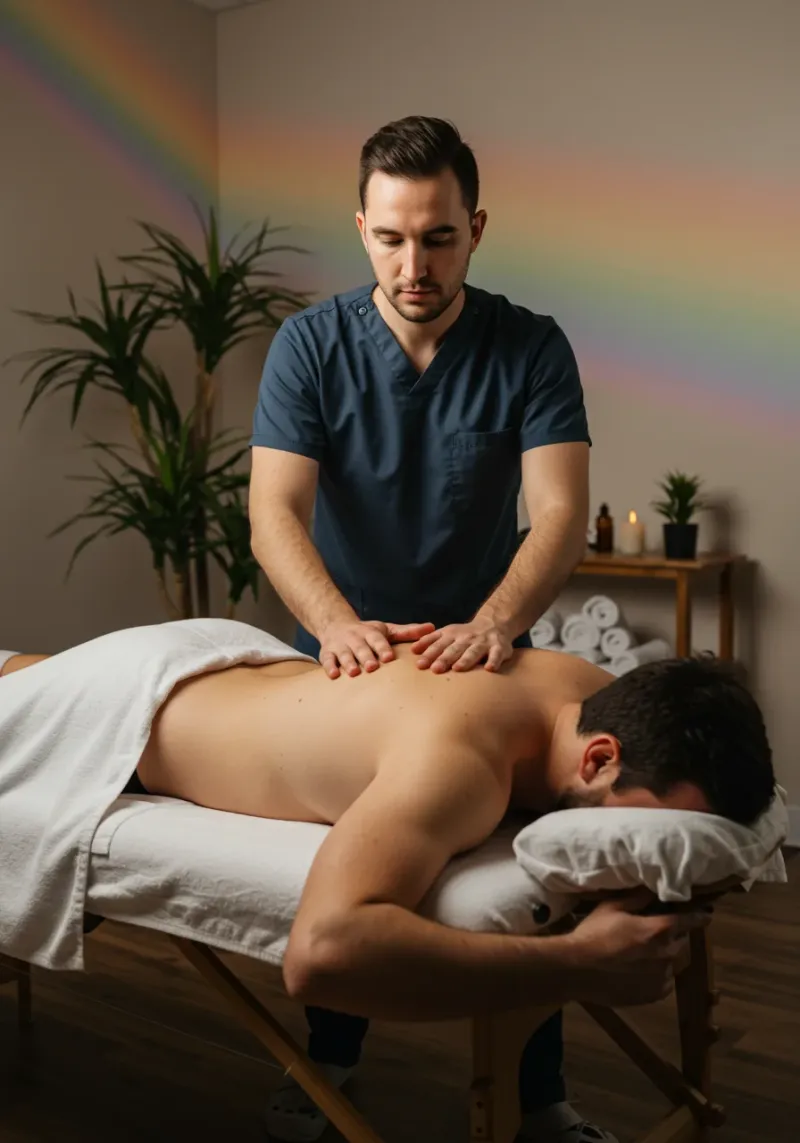
Photo: queer person relaxing in peaceful wellness space self care, via www.pdiarm.com
Let's be honest: the wellness industry loves to tell us that self-care is simple. Light a candle. Book a massage. Drink more water. But for a huge portion of the LGBTQ+ community, the reality of accessing and prioritizing personal wellness is anything but straightforward. There's a reason so many queer and trans folks find themselves running on empty — and it's not because we don't know that rest matters.
It's because the barriers are real, layered, and often invisible to people who've never had to navigate them.
The Weight of Just Getting By
Before we even get to "self-care," a lot of LGBTQ+ people are dealing with something therapists call minority stress — the chronic, low-grade (and sometimes not so low-grade) psychological toll of living in a world that regularly questions your right to exist. Whether it's navigating family rejection, surviving hostile workplaces, or just bracing yourself every time you walk into a new space, that kind of ongoing hypervigilance is exhausting in ways that go bone-deep.
When you're in survival mode, a spa day doesn't even register as an option. You're too busy just keeping things together.
Jordan, a 34-year-old nonbinary person from Atlanta, put it plainly: "I spent so many years just trying to be okay that the idea of doing something nice for my body felt almost laughable. Like, I hadn't even figured out how to feel safe in my body yet — let alone pamper it."
That's not a personal failing. That's a completely rational response to a genuinely difficult set of circumstances.
Medical Trauma Is More Common Than You Think
For trans and gender-nonconforming folks especially, healthcare settings can carry serious trauma. Studies consistently show that a significant percentage of transgender Americans have experienced discrimination or mistreatment in medical environments — from being misgendered and dismissed to outright refusal of care. When your past experiences with healthcare providers have been dehumanizing, it makes a lot of sense that you'd avoid putting yourself back in that kind of vulnerable position.
And wellness spaces — massage studios, spas, physical therapy offices — often feel like extensions of that medical world. Even if they're technically separate, the vulnerability of being touched by a stranger, of lying on a table and trusting someone with your body, can trigger those same protective instincts.
This is why representation in wellness genuinely matters. It's not just about optics. When you walk into a space and see yourself reflected — in the staff, in the marketing, in the intake forms that actually have inclusive gender options — something shifts. You can start to breathe a little easier.
The Money Problem Nobody Wants to Talk About
Here's another piece of the puzzle that doesn't get enough airtime: LGBTQ+ Americans, particularly queer people of color, trans folks, and those who've experienced family rejection, face significant economic disparities. Wellness services — massage, acupuncture, float therapy, even gym memberships — cost money. Money that a lot of people in our community simply don't have in abundance.
When you're choosing between a 60-minute massage and keeping the lights on, the massage loses every time. And then the wellness industry turns around and markets self-care as a moral imperative, which just adds guilt to the pile.
This is why it's worth seeking out community-rooted wellness options: sliding-scale massage clinics, LGBTQ+ community centers that offer free or low-cost wellness programming, mutual aid networks that sometimes cover things like therapy or bodywork. These resources exist — they're just not always easy to find, which is part of why directories and guides like this one matter.
Internalized Shame and the Body
There's also the quieter, more internal stuff. A lot of LGBTQ+ people grew up receiving explicit or implicit messages that their bodies were wrong — too feminine, too masculine, too queer, too much, not enough. That kind of messaging doesn't just evaporate when you come out or find your community. It tends to live in the body, shaping how comfortable we feel in our own skin and how worthy we feel of care.
Bodywork — massage, somatic therapy, movement practices — can actually be a powerful tool for healing this specific kind of wound. But only when it happens in a space that feels genuinely safe. A therapist who uses your correct pronouns without being asked, who doesn't flinch or make it weird, who treats your body with matter-of-fact respect — that experience can be quietly revolutionary.
Practical Ways to Start Breaking the Cycle
So what does it actually look like to start prioritizing your wellness when you're starting from a place of depletion, distrust, or limited resources? A few places to begin:
Start small and lower the stakes. You don't have to book a luxury retreat. A 30-minute chair massage at a queer-friendly studio, a free yoga class at your local LGBTQ+ center, or even a self-massage practice at home counts. The goal is to build a relationship with caring for your body, not to achieve some idealized version of wellness.
Do the vetting work upfront. Before you book anywhere new, take five minutes to check their website and social media. Do they use inclusive language? Do they have a non-discrimination policy? Have other LGBTQ+ folks left reviews? A little research goes a long way toward protecting your energy.
Give yourself permission to have needs. This one sounds simple and is actually kind of hard. A lot of queer folks have been conditioned to minimize their needs or feel guilty for having them. Wellness starts with the radical act of deciding that you are worth taking care of.
Find your people first. Community is its own form of wellness. Sometimes the path back to your body runs through connection — finding a queer-affirming therapist, joining an LGBTQ+ wellness group, or even just following practitioners online who reflect your experience. Representation builds trust, and trust makes everything else possible.
Treat self-care as resistance, not luxury. In a world that often works overtime to make LGBTQ+ people feel like less, taking care of yourself is a genuinely political act. Rest, healing, and joy are not things you have to earn. They're things you deserve — right now, exactly as you are.
The wellness paradox is real. But so is the possibility of getting out from under it. One small, intentional act of care at a time.