Beyond the Corporate Spa: How LGBTQ+-Owned Wellness Spaces Are Changing the Way America Heals

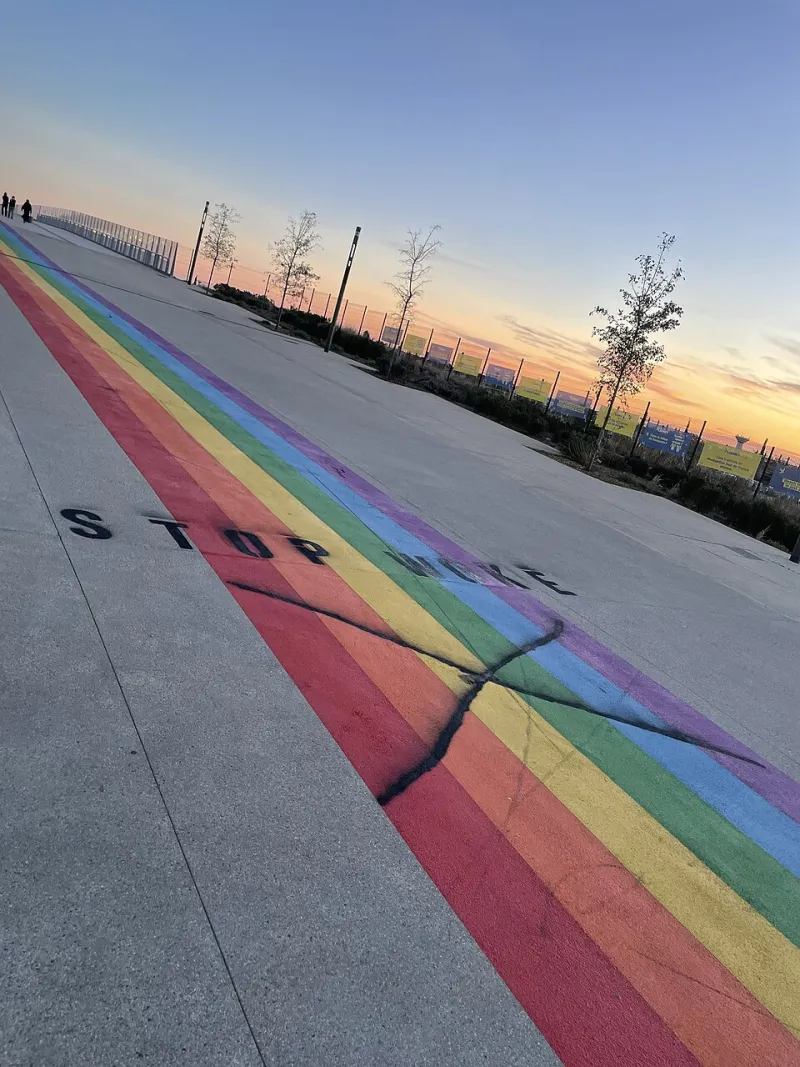
Photo: Indiana Humanities, CC BY 2.0, via Wikimedia Commons
Walk into most mainstream spas and you'll probably notice something pretty quickly: the branding is overwhelmingly heteronormative, the intake forms assume a binary gender, and the small talk from your practitioner can sometimes feel like a minefield. For a lot of LGBTQ+ folks, that low-grade discomfort doesn't exactly set the stage for deep relaxation.
But something is shifting — and it's shifting fast.
Across cities like Portland, Atlanta, Chicago, and Los Angeles, a new wave of LGBTQ+-owned and LGBTQ+-affirming wellness businesses is rewriting the rules of self-care. These studios, spas, and bodywork practices aren't just tolerant of queer clients — they're built for them. And the impact goes way beyond a rainbow flag in the window.
What Makes a Wellness Space Truly Affirming?
There's a real difference between a business that slaps a Pride Month sticker on its door every June and one that has genuinely restructured its entire client experience around inclusivity. The latter tends to show up in the details: intake forms that include non-binary gender options and preferred pronouns, staff training that goes beyond basic sensitivity workshops, and a physical environment that reflects queer culture without reducing it to a costume.
Marcos Rivera, who opened his massage therapy practice in Denver three years ago after years of working in conventional spas, describes it this way: "I got tired of watching queer clients come in and immediately start shrinking themselves. Changing their pronouns when they talked about their partners, being vague about their bodies, bracing for some comment that made them feel weird. I wanted to build a place where nobody had to do that."
Rivera's studio uses gender-inclusive language throughout, offers draping options tailored to individual comfort levels, and actively markets to the trans and non-binary community — a demographic he says is chronically underserved in the wellness industry.
The Business Case for Authenticity
Here's something the corporate wellness world is slowly waking up to: LGBTQ+ consumers are a powerful market segment, and they're deeply loyal to businesses that actually show up for them. According to data from Gallup, more than 7% of American adults now identify as LGBTQ+, with that number significantly higher among younger generations. That's tens of millions of people who are actively looking for services where they feel genuinely welcomed.
But LGBTQ+-focused wellness entrepreneurs aren't primarily motivated by market share. For most of them, it's deeply personal.
Jamila Okonkwo opened her holistic bodywork studio in Atlanta's Old Fourth Ward neighborhood after her own experiences as a Black queer woman navigating a wellness industry that rarely saw her. "I couldn't find a space where all of me was welcome — not just the parts that were easy for people," she says. "So I built it myself."
Her practice integrates massage therapy, energy work, and somatic healing, with a client base that skews heavily toward queer women and non-binary people of color. She's intentional about pricing structures too, offering sliding scale rates because she knows economic barriers disproportionately affect the communities she serves.
Community Care as a Business Model
One of the most compelling things about the LGBTQ+ wellness movement is how it's challenging the individualistic model that dominates mainstream self-care culture. The message from most corporate wellness brands is pretty straightforward: buy this product, book this service, optimize yourself. It's transactional and deeply personal in the most isolated sense.
Queer wellness spaces tend to operate from a different philosophy — one rooted in collective care and mutual support. Many host community events, workshops, and educational sessions. Some partner with LGBTQ+ nonprofits or donate a portion of revenue to local advocacy organizations. Others create referral networks with therapists, doctors, and other providers who are known to be affirming.
In Chicago, a queer-owned spa collective called Softer Ground (a fictional example representative of real emerging models) hosts monthly community wellness nights where sliding-scale services are offered alongside peer support circles. The idea is that healing doesn't happen in isolation — it happens in community.
"We're not just selling massages," says one of the collective's founding members. "We're building infrastructure for our community's wellbeing. That looks different than a day spa at a Marriott."
What Clients Actually Experience
For many LGBTQ+ clients, finding an affirming wellness provider is genuinely life-changing — and not in a hyperbolic way. Bodywork requires a level of physical vulnerability that can be especially fraught for people who have experienced trauma related to their gender or sexuality. Feeling safe in your body during a massage, being able to breathe fully and actually let go, isn't something everyone gets to take for granted.
Tyler, a 29-year-old trans man in Seattle, describes his first experience at an LGBTQ+-affirming massage studio as a turning point. "I'd avoided massage for years because I didn't want to deal with the awkwardness — or worse. The first time I went somewhere that actually got it, I cried on the table. Not because anything bad happened. Because nothing bad happened. That was new."
Stories like Tyler's are common in these spaces, and they underscore why the work these business owners are doing matters on a level that goes well beyond commerce.
The Road Ahead
The LGBTQ+ wellness movement is still growing, and it faces real challenges: funding gaps, zoning issues in less progressive cities, burnout among practitioners who are doing deeply emotional labor, and the ever-present risk of co-optation by larger brands that want the aesthetic without the substance.
But the momentum is undeniable. More massage therapy schools are incorporating LGBTQ+ competency training into their curricula. More practitioners are seeking out continuing education on working with trans and non-binary bodies. And more queer people are investing in their own healing — because they finally have spaces where that healing feels possible.
The revolution isn't just in the spa menu. It's in the belief that everyone deserves to feel at home in their own skin — and that the wellness industry has a responsibility to make that possible.