Skin Hunger Is Real — and Queer People Are Feeling It Most
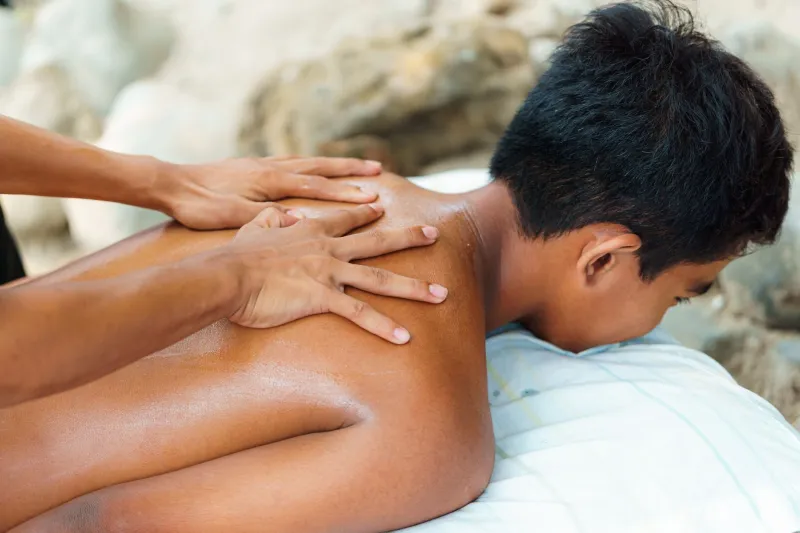
There's a term that psychologists use — skin hunger — to describe the deep, almost physical ache that comes from being chronically under-touched. It sounds poetic, maybe even a little dramatic, until you start looking at the numbers. Then it sounds like a public health issue.
And within LGBTQ+ communities specifically, it sounds like something that's been quietly building for a long, long time.
Post-pandemic wellness data has been eye-opening for practitioners in the bodywork space. Across the country, massage therapists, somatic coaches, and holistic wellness providers who serve queer clientele are reporting a noticeable and sustained increase in first-time clients — many of whom arrive not just physically tense, but emotionally depleted in ways that go well beyond a rough week at work.
"I started noticing it maybe six months after things reopened," says one licensed massage therapist based in Atlanta who works primarily with LGBTQ+ clients. "People weren't just coming in sore. They were coming in starved. There's a difference in how a body holds that kind of tension."
The Numbers Behind the Need
A 2023 survey by the American Massage Therapy Association found that roughly 19% of American adults received at least one massage in the prior year — a figure that's been climbing steadily since 2020. But within LGBTQ+ demographics, wellness industry analysts and community health researchers are tracking an even steeper curve.
The Trevor Project's ongoing research into queer mental health consistently highlights social isolation as one of the most pressing challenges facing LGBTQ+ people in the US, particularly those in less affirming environments. When you layer pandemic-era lockdowns on top of communities that were already navigating elevated rates of family rejection, housing instability, and limited access to affirming social spaces, the result is a population that lost touch — literally — in ways that went deeper than most.
For a lot of queer people, chosen family is everything. It's the hug from your best friend who gets it, the casual physical ease of being around people who see you fully. When those networks went remote, or fractured under the stress of the past few years, the absence of safe, affirming physical contact left a gap that Netflix subscriptions and group chats couldn't fill.
Professional bodywork stepped in — and the demand hasn't slowed down.
More Than Muscle Work
Here's the thing that makes this conversation nuanced: therapeutic massage has always been about more than tight shoulders and lower back pain. But practitioners who specialize in working with LGBTQ+ clients will tell you that something specific happens in the room when a queer person finally feels safe enough to receive care without bracing for judgment.
Many LGBTQ+ individuals have complicated relationships with their own bodies — shaped by years of dysphoria, hypersexualization, medical trauma, or simply the experience of moving through a world that hasn't always treated their physical selves with respect. Walking into a spa or bodywork studio can carry a weight that straight, cisgender clients may not bring through the door in the same way.
When that weight lifts — when a client realizes they're in a genuinely affirming space with a practitioner who's not going to misgender them, make assumptions, or treat their body as something to be corrected — the release can be profound.
"I've had clients cry on the table, not because anything hurt, but because they weren't used to being touched without having to perform or explain themselves," shares a non-binary massage therapist and spa owner in Portland, Oregon. "That kind of emotional release is real healing. It's not separate from the physical work — it is the physical work."
The Loneliness Factor
Let's be honest about what's underneath some of this demand, because the wellness industry sometimes dances around it: a lot of people are lonely. And loneliness, research increasingly confirms, registers in the body the same way pain does.
A 2023 report from the US Surgeon General declared loneliness an epidemic, citing data showing that nearly half of American adults report measurable feelings of isolation. LGBTQ+ Americans are disproportionately represented in those numbers — particularly older queer adults, queer people of color, and those living in rural or conservative areas where affirming community infrastructure is thin.
For these individuals, a regular appointment with a trusted massage therapist or bodywork practitioner isn't a luxury. It's one of the only consistent, judgment-free sources of human contact in their week. That's not a failure of their social lives — it's a reflection of how little the broader culture has invested in creating safe spaces for queer people to simply exist in their bodies alongside others.
Recognizing this dynamic isn't about reducing professional wellness to a stand-in for connection. It's about acknowledging the full picture of what these services provide, and why the practitioners who do this work with intentionality and cultural competence are doing something genuinely significant.
What Practitioners Are Doing Differently
The most in-demand LGBTQ+-affirming bodywork providers right now aren't just slapping a rainbow flag on their website. They're doing the actual work — ongoing education around trauma-informed care, inclusive intake forms that ask about pronouns and comfort levels rather than making assumptions, and deliberate community presence that signals genuine investment in queer wellness rather than a marketing pivot.
Many are also expanding the range of services they offer to meet the full spectrum of what their clients are seeking. Breathwork, somatic therapy, energy work, guided relaxation — these modalities are showing up more frequently in LGBTQ+-centered wellness spaces because they address the emotional and nervous-system dimensions of what clients are carrying, not just the muscular ones.
The result is a category of wellness provider that functions almost like a community anchor — a place where queer clients can return week after week, building a relationship with someone who knows their history, respects their identity, and shows up consistently as a safe presence.
That kind of continuity is rare and valuable. And right now, a lot of queer people are actively seeking it out.
Finding Your Way In
If any of this resonates — if you've been putting off booking that first session, or if you've had mixed experiences in wellness spaces that made you hesitant to try again — know that the landscape is shifting. Affirming, competent, genuinely queer-friendly practitioners exist in more cities and towns than ever before, and directories like this one exist specifically to help you find them without having to do the emotional labor of vetting every provider from scratch.
Your body has been carrying a lot. The demand for therapeutic touch within LGBTQ+ communities isn't a trend or a statistic — it's a signal. It's people saying, quietly or out loud: I'm ready to be cared for.
That's not a small thing. And you don't have to keep waiting to act on it.