Pack Your Pride: The Ultimate Queer Traveler's Checklist for Planning a Wellness Retreat
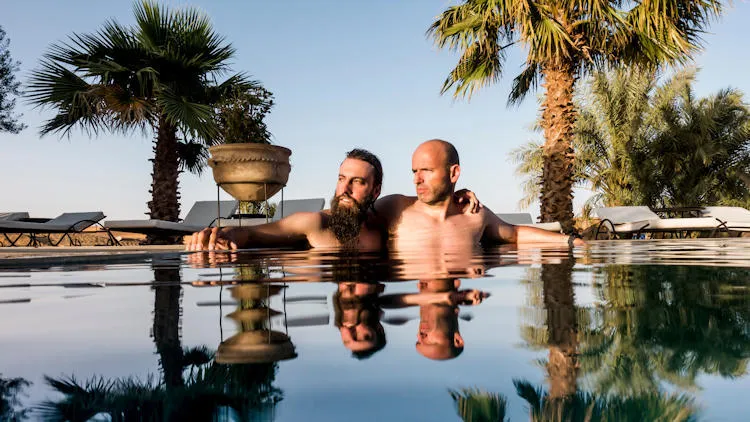
Photo: LGBTQ couple relaxing at luxury spa resort wellness retreat outdoor pool, via www.luxurytravelmagazine.com
There's a particular fantasy that a lot of us in the LGBTQ+ community have quietly nurtured: a few days completely unplugged, somewhere beautiful, with good food, skilled bodywork, and zero obligation to explain yourself to anyone. A place where you can just be — no code-switching, no calculating how out to be at the front desk, no wondering whether the couples' massage you booked is going to get weird when you show up with your same-sex partner.
That trip is absolutely possible. But getting there takes a little more planning than opening a travel magazine and pointing at a picture.
This guide is your roadmap. Whether you're planning a solo reset, a romantic getaway, or a group trip with your chosen family, here's how to build a queer wellness retreat that actually delivers.
Start With the Basics: Why Vetting Matters
The wellness travel industry has gotten much better at LGBTQ+ inclusion in recent years — but "better" doesn't mean "universally safe." A resort can have rainbow imagery in its Pride Month Instagram posts and still have staff who aren't trained on pronoun use, or a booking system that forces binary gender selection, or a culture that's welcoming to gay couples but quietly uncomfortable with trans guests.
This isn't about being cynical. It's about doing the research so you can actually relax once you get there. The goal is to arrive at your destination and spend your mental energy on healing, not on managing your environment.
Building Your Pre-Booking Checklist
Before you hand over your credit card to any wellness property, run through these questions:
Does the property explicitly signal LGBTQ+ inclusion? Look beyond a generic "we welcome all guests" disclaimer. Affirming properties typically list LGBTQ+ travelers specifically in their welcome language, mention non-discrimination policies that include sexual orientation and gender identity, and in many cases, have earned certifications or recognition from organizations like the International Gay & Lesbian Travel Association (IGLTA). A quick search for the property on IGLTA's directory is a solid starting point.
What does the staff training look like? This one's worth a direct inquiry. A quick email to the property asking something like, "Do your wellness practitioners have training in working with LGBTQ+ guests, including trans and non-binary clients?" will tell you a lot. Properties that take inclusion seriously will answer confidently. Properties that are just going through the motions will hedge.
How does the booking process handle gender? If the online booking form doesn't have an option beyond "Mr./Mrs." and doesn't ask for preferred name or pronouns, that's a flag. It doesn't mean the property is hostile, but it does mean you may need to do some extra communication upfront — and it signals that inclusive infrastructure isn't yet a priority.
What's the couples' and shared-space policy? For same-sex couples or queer groups, it's worth confirming that couples' services, shared accommodations, and communal spaces (like co-ed pools or steam rooms) are genuinely open to you without awkwardness. Some otherwise lovely properties still default to heteronormative assumptions in their couples' programming.
Navigating Rural and Non-Urban Destinations
Some of the most beautiful wellness destinations in the US are in places that aren't exactly known for their progressive politics — the mountains of North Carolina, the high desert of New Mexico, the rural Pacific Northwest. That doesn't automatically make them unsafe, but it does mean you should do some additional homework.
A few practical steps:
- Research the specific town or county, not just the property. Local laws, attitudes, and infrastructure matter if you're going to be venturing off-property for meals, hikes, or day trips.
- Look for queer traveler reviews, not just general TripAdvisor ratings. Sites like Yelp sometimes surface relevant comments; queer travel blogs and LGBTQ+ travel subreddits are often more useful.
- Have a backup plan. Know where the nearest LGBTQ+-friendly urgent care or hospital is, especially if you're trans and may need to access healthcare during your trip.
- Trust your gut on the initial contact. If the property's response to your inquiry feels stiff, overly formal, or slightly off, that feeling is data.
The Retreat Itself: Maximizing the Experience
Once you've done your vetting and you're ready to book, here's how to set yourself up for the most transformative possible experience:
Communicate before you arrive. Don't wait until check-in to mention your pronouns, your specific wellness goals, or any body-related considerations you want practitioners to know about. A pre-arrival email or call gives the property time to prepare and signals to you that they're taking your needs seriously.
Build in unstructured time. The temptation is to pack every hour with treatments, fitness classes, and workshops. Resist it. Some of the most profound healing on a wellness retreat happens in the in-between moments — sitting quietly by the water, journaling after a massage, just letting your nervous system decompress.
Consider a theme or intention. The best wellness retreats aren't just about physical relaxation — they're about something. Maybe you're processing a transition. Maybe you're celebrating a milestone. Maybe you just need to remember what your body feels like when it's not in survival mode. Having an intention going in helps you choose the right treatments and get more out of conversations with practitioners.
Travel with community when you can. There's something uniquely powerful about a queer wellness trip taken with people who share your experience. Group retreats specifically designed for LGBTQ+ folks are increasingly available across the US, from yoga retreats in California to hot springs weekends in Colorado. These spaces offer something a standard resort can't: the deep exhale that comes from being surrounded by people who just get it.
A Few US Destinations Worth Your Research
Without being able to guarantee any property's current policies (always do your own up-to-date vetting), some regions have consistently stronger LGBTQ+ wellness infrastructure worth exploring: Ojai and Palm Springs in California, Asheville in North Carolina, Taos in New Mexico, and the Hudson Valley in New York all have active queer wellness communities and a higher density of affirming providers.
For destination spa resorts, look specifically for properties that have been featured in LGBTQ+ travel media, partnered with queer organizations, or hosted LGBTQ+-specific retreat programs — these are concrete signals of genuine engagement rather than rainbow-washing.
You Deserve a Trip That's Actually Restful
Wellness travel should be restorative. That means not spending your massage mentally rehearsing whether to correct your practitioner's pronoun use, not calculating whether it's safe to hold your partner's hand at the pool, not lying awake in a beautiful room wondering whether the staff sees you.
The planning work is real. But so is the payoff — a few days in a space where your whole self is welcome, your body is cared for, and rest is actually possible. That trip exists. Go find it.